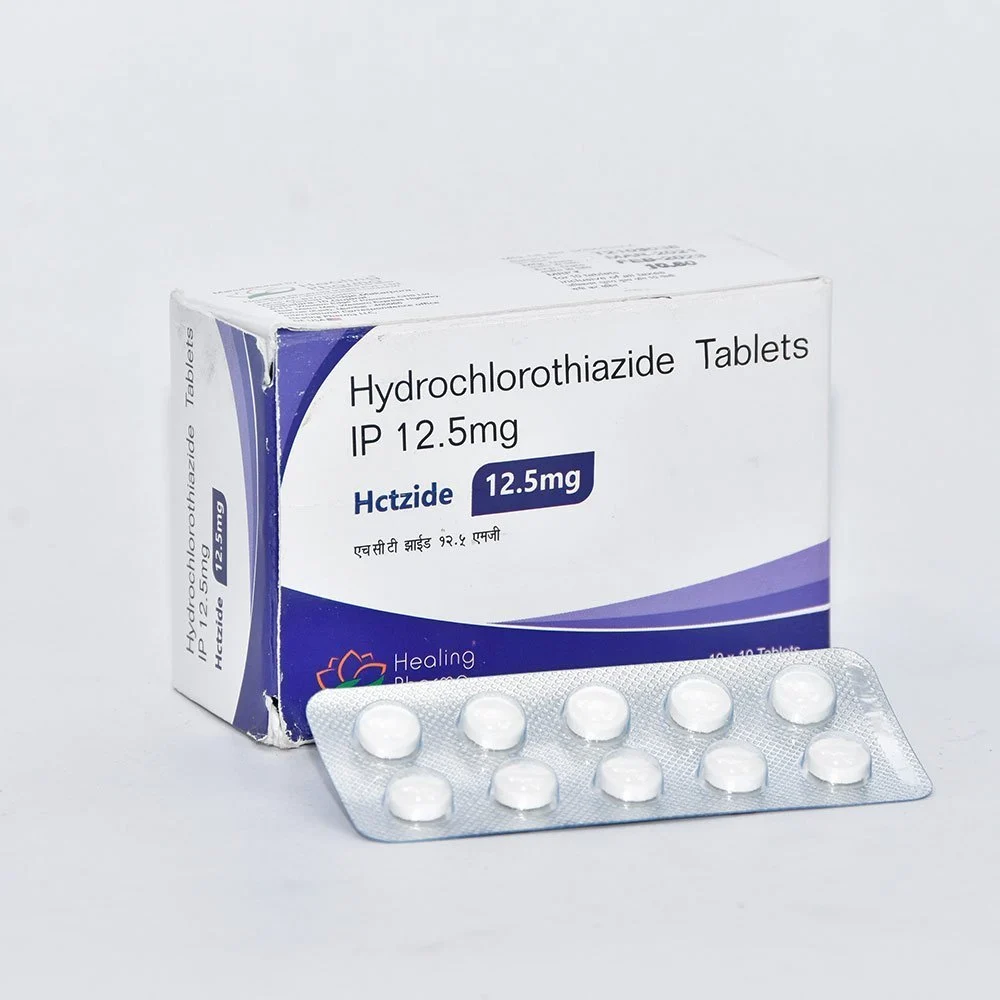
Hydrochlorothiazide
Thiazide diuretic for the treatment of hypertension or oedema. Available as a combination tablet with ACE inhibitors, beta-blockers, angiotensin II receptor antagonists, calcium channel blockers and amiloride.
Toxicity
Features of severe toxicity if hydrochlorothiazide is taken alone are unlikely; toxicity is most likely to be due to the other ingredient(s) present.
Following ingestion of a therapeutic dose, diuresis begins at 2 hours, peaks in about 4 hours, and lasts approximately 6-12 hours, with the antihypertensive effect persisting for up to 24 hours.
Children or adults ingested less than a toxic dose & no new symptoms no need of medical assessment. advised to seek medical attention if symptoms develop.
| Drug | Suggested Toxic Dose |
|---|---|
| Bendroflumethiazide | 0.4 mg/kg |
| Chlortalidone | 3.5 mg/kg |
| Clopamide | 1.4 mg/kg |
| Cyclopenthiazide | 0.1 mg/kg |
| Hydrochlorothiazide | 3.5 mg/kg |
| Indapamide | 0.4 mg/kg |
| Metolazone | 0.7 mg/kg |
| Xipamide | 3 mg/kg |
Diuresis can lead to dehydration, circulating volume depletion, hypotension and electrolyte disturbances.
Hypokalaemia can occur and is especially important in patients with pre-existing cardiac disease. Hyponatraemia, hypomagnesaemia, hypercalcaemia, and hypo- or hyperglycaemia are also possible. Electrolyte abnormalities can lead to arrhythmias.
Prolonged QT interval and torsade de pointes can occur in the absence of hypokalaemia.
Muscle cramps and general weakness as well as hyperreflexia and convulsions have been reported.
- Gut decontamination (including activated charcoal) is unlikely to be of benefit.
- Monitor vital signs and check the capillary blood glucose. Check and record pupil size.
- Perform a 12-lead ECG in all patients who require assessment. Check cardiac rhythm, QT interval and QRS duration.
Consider repeating the ECG in ANY OF the following circumstances:
- The initial ECG is abnormal
- The patient is symptomatic
- The recommended observation period is not yet complete
- In all patients check U&Es, magnesium, calcium, LFTs, blood glucose and acid base status. Correct electrolyte abnormalities.
- Hyperkalaemia
- Hypoglycaemia
- Hypotension
- Ensure adequate hydration to maintain a good urine output (0.5 mL/kg/hour) and perfusion.
- Convulsions: Give oxygen; check blood glucose, U&Es, calcium, magnesium, phosphate and blood gases. Correct acid base and metabolic disturbances as required. Single brief convulsions do not require treatment.
There are few published reports of isolated overdoses involving ARBs. Adverse signs and symptoms reflect orthostatic or absolute hypotension and include palpitations, diaphoresis, dizziness, lethargy, or confusion.
There are no reported cases of poisoning or overdose; however, hypotension should be anticipated and treat supportive care, including IV crystalloid and catecholamines