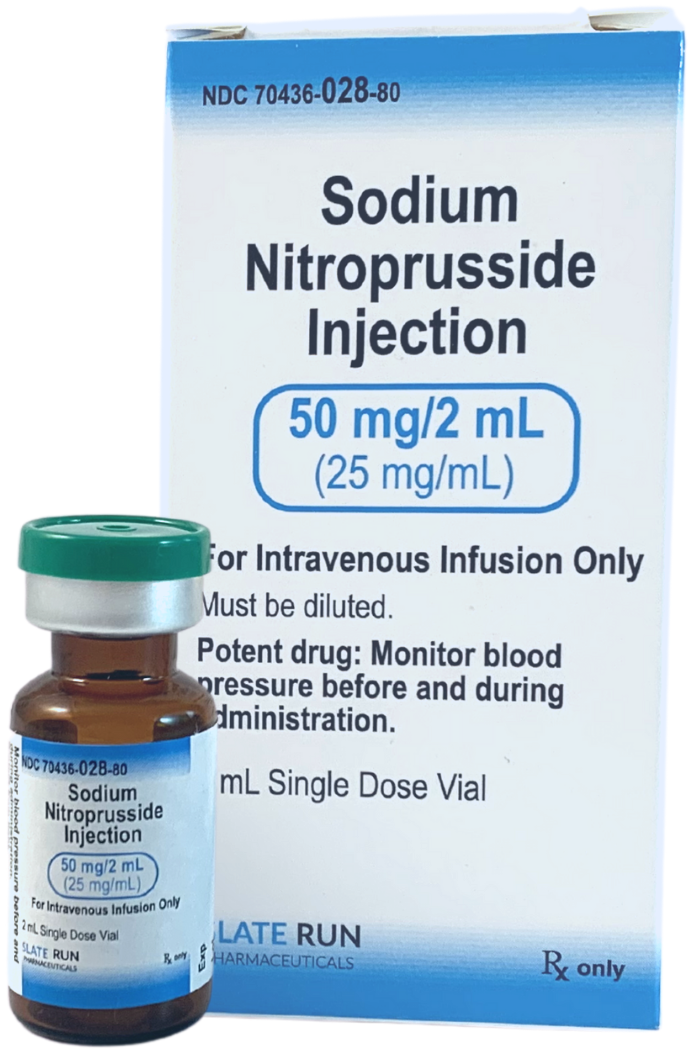
SODIUM NITROPRUSSIDE
Use: Vasodilating agent used for hypertensive emergencies, controlled hypotension in anaesthesia and acute or chronic heart failure.
Toxicity
Toxic effects of sodium nitroprusside are due to two mechanisms:
via the production of nitric oxide
in erythrocytes, which inhibits cytochrome oxidases and cellular respiration.
Features due to direct effect of nitroprusside:
Nausea, vomiting, headache, dizziness, palpitations, muscle twitching and profound hypotension.
Features due to cyanide:
Headache, nausea, vomiting, sweating, tachycardia, hypotension, metabolic acidosis, convulsions, coma and cardio-respiratory arrest.
- Lactic acidosis may occur up to 1 hour following discontinuation of nitroprusside.
- Methaemoglobinaemia.
Features due to thiocyanate toxicity:
Anxiety, confusion, miosis, tinnitus, hallucinations, muscle cramps, hyperreflexia and convulsions.
- Stop intravenous infusion of nitroprusside.
- Maintain a clear airway and ensure adequate ventilation.
- Monitor vital signs and cardiac rhythm; check the capillary blood glucose. Check and record pupil size.
Please be aware that pulse oximetry is unreliable in the presence of methaemoglobinaemia. - Perform a 12-lead ECG in all patients who require assessment. Check cardiac rhythm, QT interval and QRS duration.
Consider repeating the ECG in ANY OF the following circumstances:
- The initial ECG is abnormal
- The patient is symptomatic
- The recommended observation period is not yet complete
- In all patients, check arterial (or venous) blood gases for pH, lactate and methaemoglobin concentrations.
Decrease lactate is expected once nitroprusside infusion is stopped, and dehydration resolves. Persistently high lactate concentration above 10 mmol/L may indicate a need for treatment of cyanide toxicity.
Methaemoglobinaemia: refer to PCC protocol 34
- Maintain a clear airway and ensure adequate ventilation.
- Consider activated charcoal (charcoal dose: 50 g for adults; 1 g/kg for children) if the patient presents within 1 hour of ingestion of any amount.
If practical expertise exists, consider gastric aspiration/lavage in adults within 1 hour of ingestion of nitroprusside crystals, provided the airway can be protected.
- Monitor vital signs and cardiac rhythm; check the capillary blood glucose. Check and record pupil size.
Please be aware that pulse oximetry is unreliable in the presence of methaemoglobinaemia. - Perform a 12-lead ECG in all patients. Check cardiac rhythm, QT interval and QRS duration.
Consider repeating the ECG if the initial ECG is abnormal, the patient is symptomatic, or the observation period is incomplete.
- Check arterial (or venous) blood gases for pH, lactate and methaemoglobin concentrations.
Persistently high lactate concentration above 10 mmol/L may indicate a need for treatment of cyanide toxicity.
Most adverse reactions occurred on day 5 of the IV infusion, and were associated with higher rates of infusion (more than 200 micrograms/min) and poor renal function.
Lethal Dose: The lowest published lethal parenteral dose is 10 mg/kg administered intravenously over 80 minutes (Davies et al, 1975).
High Risk Factors: A variety of factors—including poor nutrition, critical illness, surgery, diuretic use, and young age—place patients at risk for developing cyanide toxicity.