Battery Ingestion Protocol
Types and Toxicity Risk
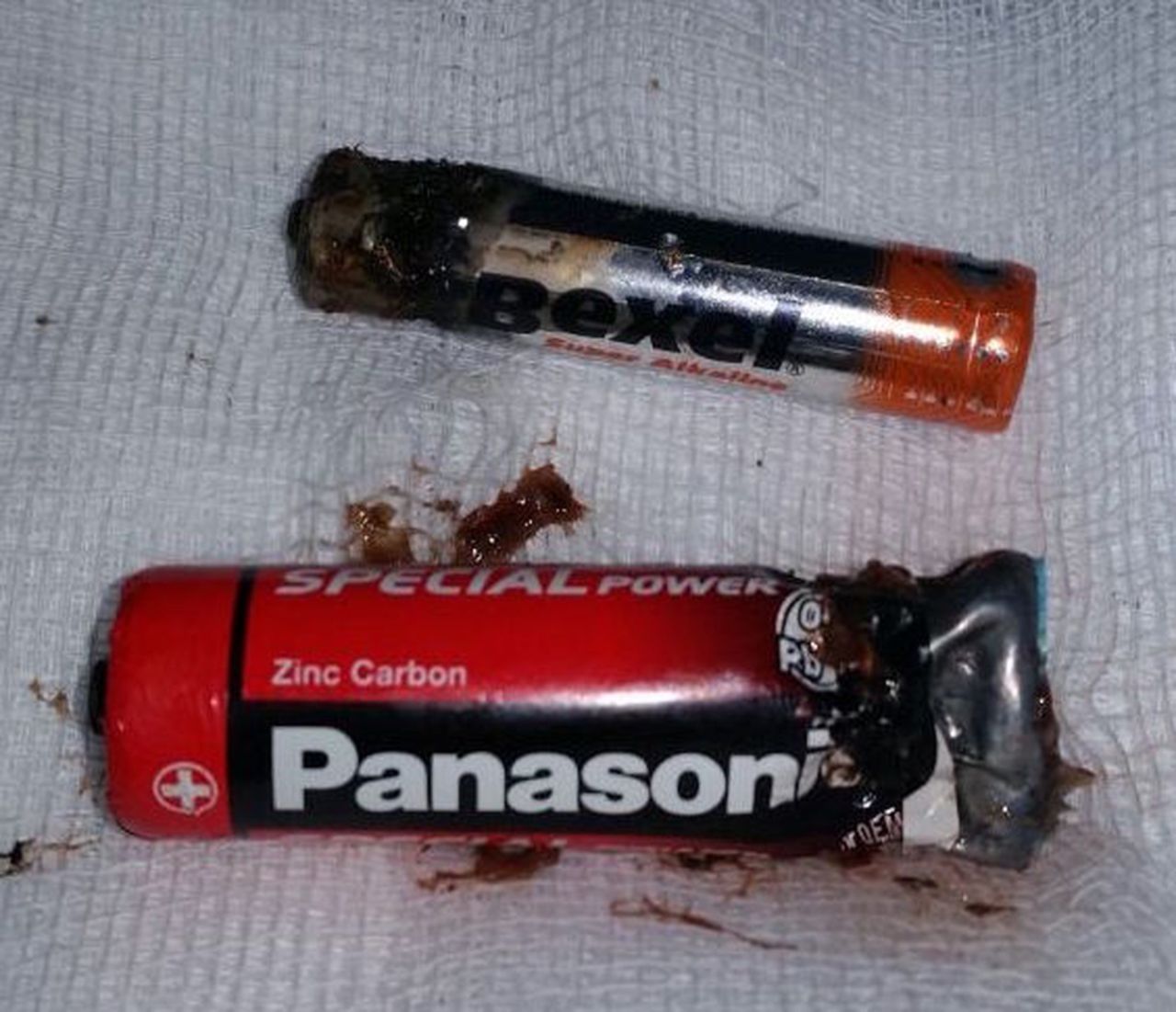
- AA / AAA Batteries: Moderate toxicity – contain potassium hydroxide → cause caustic burns and mucosal irritation.
- Button (Disc) Batteries: High toxicity – especially lithium >20 mm → cause rapid electrochemical burns, necrosis, fistulas, and life-threatening hemorrhage.
- Lithium-Ion Batteries: Severe risk – cause caustic burns + systemic lithium toxicity + release of toxic gases (HF, LiOH).
- Nickel-Lithium Batteries: High risk – cause chemical burns + heavy metal poisoning (nickel, lithium).
- Cordless Phone (NiMH) Batteries: Moderate-to-high risk – cause caustic burns + nickel toxicity (renal damage, carcinogenic potential).
Common Symptoms
- Pain, drooling, dysphagia, vomiting, abdominal pain.
- Esophageal impaction = rapid burns, tracheoesophageal fistula, perforation, or massive bleeding.
Diagnostic Steps
- Radiographs (Chest/Abdominal X-ray) – confirm presence and location.
- CT scan if leakage or perforation suspected.
- Differentiate from coins/foreign bodies on X-ray (look for “double ring sign”).
Management Protocol
1. Immediate Action
- Any battery lodged in the esophagus = EMERGENCY → Immediate removal (rigid or flexible endoscopy).
- Button and lithium batteries: must be removed within 2 hours.
2. If Beyond Esophagus
- Asymptomatic → observe with serial X-rays and stool monitoring.
- If battery remains stationary >48h or symptoms develop → urgent removal.
3. Post-Removal Care
- NPO (fasting), IV fluids, analgesia.
- Antibiotics + antacids ± steroids if mucosal injury present.
- Monitor for perforation, fistulas, strictures.
- Follow-up with imaging or endoscopy.
4. Special Considerations
- Lithium-ion / Nickel-lithium: monitor for systemic toxicity (neurological, renal, heavy metal exposure).
- Button batteries: high risk of vascular fistulas → monitor for sudden bleeding.
- Airway compromise (aspirated battery) → emergency airway management.
Long-Term Follow-Up
- Risk of strictures, chronic GI symptoms, renal/heavy metal toxicity.
- Endoscopic surveillance if severe burns or complications.
Education & Prevention
- Keep batteries out of children’s reach.
- Secure battery compartments in household devices.
- Immediate referral to Poison Control / ER if ingestion suspected.
Button Battery Ingestion Protocol
Clinical Assessment
- History: Time of ingestion, type/size, number, symptoms.
- Exam: Oral cavity, airway, chest, obstruction signs.
- Imaging: X-ray (AP + lateral) to confirm location/orientation.
Classification
- Location: Esophagus vs. stomach vs. intestines.
- Time: <2 h, 2–12 h, >12 h.
- Size: ≤12 mm vs. >12 mm (≥20 mm very high risk in <5 yrs).
Management
Esophageal
- Immediate endoscopic removal – do not delay.
- If <12 h, ≥1 yr, suspected lithium: give honey or sucralfate.
- Inspect mucosa post-removal; consider acetic acid irrigation.
Gastric / Beyond
- No symptoms, ≤12 mm: observe, stool checks, repeat X-ray if not passed by 10–14 d.
- ≥15 mm in young child or symptomatic: consider endoscopic removal.
- Battery + magnet: urgent removal.
Adjunctive Therapy
- Honey: 10 mL q10min × up to 6 doses (≥1 yr, ≤12 h).
- Sucralfate: 10 mL q10min × up to 3 doses.
- NPO until esophageal battery excluded.
Post-Removal Care
- Admit if mucosal injury present.
- Diet progression: clear → soft; restrict ~28 d if esophageal injury.
- Monitor for late complications: stricture, TEF, vascular fistula.
Not Recommended
- No induced vomiting.
- No blind Foley/magnet retrieval.
- No chelation / heavy metal testing routinely.
- No cathartics/PEG lavage unless indicated.
Follow-Up
- Close monitoring for airway/swallowing problems.
- Imaging/endoscopy if symptoms appear.
- Caregivers: watch for delayed bleeding, voice changes, distress.